

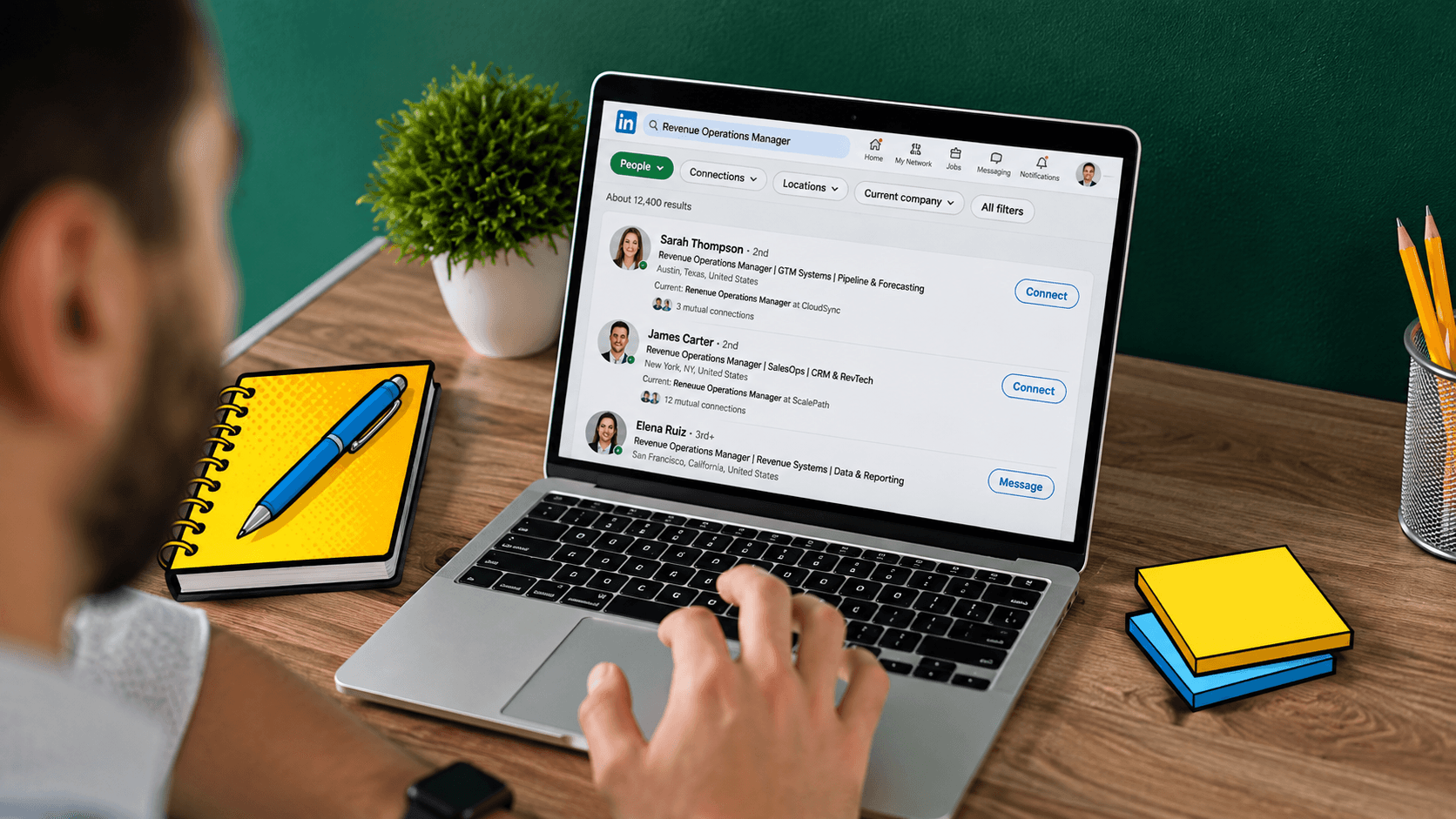




LinkedIn outbound can be an effective way for cybersecurity companies to reach potential buyers, but credibility matters more than simply getting a message into someone’s inbox. Security professionals are particularly conscious of trust, authenticity and risk, which means an outreach approach needs to feel relevant and legitimate rather than automated or overly sales-driven. How a company approaches prospects also reflects on its reputation, particularly when using tools that automate LinkedIn activity. The same principle applies to email: understand why CISOs ignore generic outbound messages before choosing a channel or writing the first approach.
What makes LinkedIn outbound credible to a security buyer?
Credibility starts with the sender’s professional presence and the relevance of the outreach. A complete LinkedIn profile gives buyers a reason to take the sender seriously, while a personalised message demonstrates an understanding of their role, organisation or security priorities. Follow-ups should add value rather than simply repeat the initial pitch. Equally important is how outreach is conducted: activity should remain human-led and comply with LinkedIn’s rules to avoid putting individual accounts or the company’s reputation at risk.
Credibility factor | Credible | Weak |
Profile | Clear role, current company, relevant experience | Sparse profile, generic headline |
First message | Specific reason for contact, short, no immediate ask for a meeting | Template with a pasted name and a pitch |
Relevance | Based on account context or a signal | Based on a job title only |
Sequence | A small number of considered touches | Rapid, repetitive follow-ups |
Proof | Specific, accurate and easy to verify | Inflated or unverifiable claims |
Consistency | Matches what the buyer sees by email and call | Different story on each channel |
How should a profile support outreach?
A buyer who receives a connection request will often look at the profile before replying. It should say who the person is, what they do and who they help, without exaggeration. A named role at a known company, a clear description and sensible recent activity give the request context. A profile that looks like a placeholder reduces trust before the message has been read.
What should the first message contain?
A good first message is short and specific. It names the reason for contact, ties it to something true about the account or role, and offers a low-pressure next step. It avoids asking for a meeting in the opening line and avoids long product descriptions. The reason for contact can come from account context, such as a leadership change, a technology shift or a regulatory deadline.
Why does the buying committee matter on LinkedIn?
Security solutions are rarely evaluated by a single decision-maker. LinkedIn makes those stakeholders visible, which lets a team plan contact by role and tailor each message to what the role cares about. A security leader, an IT lead and a risk or compliance owner each need a different angle. Single-threaded conversations are fragile, so use LinkedIn to map who else might be involved.
What does LinkedIn allow, and what is the risk of automation?
LinkedIn’s help centre states in its article on prohibited software and extensions that it does not permit third-party software, including bots and browser extensions, that scrapes, modifies or automates activity on its website. Its related article on automated activity says the same, and warns that members who use such tools risk their accounts being restricted. The rules and their enforcement can change, so check the current pages.
The practical consequences for a cybersecurity company are twofold. An account restriction interrupts a programme. And outreach that looks automated damages credibility with an audience that is alert to inauthentic behaviour. Teams that want to use tooling should understand what each tool does on the platform, and decide which parts of the process stay with a person.
How should LinkedIn work with other channels?
LinkedIn is one touchpoint in a wider sequence, and buyers compare what they see across channels. A message that matches the email and the call, and refers to the same reason for contact, looks consistent. A message that contradicts them looks careless. Agree a single reason for contact per account and use each channel to extend it. The programme’s success should be reflected in the quality of conversations and opportunities it generates.
What does a credible LinkedIn outbound process look like?
- Select accounts by fit and signals, not by job title alone.
- Map roles that influence the purchase in each account.
- Prepare the profile of the person who will send the messages.
- Write a reason for contact based on account context.
- Send a small number of considered messages, each adding something new.
- Record the outcome in the CRM, including roles engaged and next steps.
- Review results by account tier and role, and adjust.
How does The Point Company approach cybersecurity outbound?
The Point Company is a B2B pipeline generation provider specialising in complex technology markets including cybersecurity and HealthTech. For an example of a cybersecurity outbound programme, see the Armis case study. LinkedIn is one channel in the multi-channel approach, not the whole system.
FAQs
Is LinkedIn outbound effective for cybersecurity companies?
It can be, when it follows account selection, role mapping and relevant messaging. There is no single figure that applies to every vendor, so measure it by qualified conversations and opportunities.
Is LinkedIn automation allowed?
LinkedIn’s help centre says it does not permit third-party software that scrapes, modifies or automates activity on its website, and that members using such tools risk restriction. Check the current pages before choosing a tool.
What should a LinkedIn outreach message say?
A specific reason for contact, tied to the buyer’s role or account context, kept short, with a low-pressure next step.
How is LinkedIn outbound different from LinkedIn content?
Outbound is direct, targeted contact with named buyers. Content builds general awareness and trust over time. They support each other, but they have different purposes.
Conclusion
Credible LinkedIn outbound in cybersecurity comes from a real profile, relevant context, restrained sequencing and respect for the platform’s rules. Plan it with account selection and role mapping, and connect it to the other channels. To review your own approach, compare your current outbound model with a pipeline generation system.